
Glacier collapse triggers catastrophic flooding along Nepal-Tibet border
A chunk of ice breaking away high in the Himalayas sent a wall of debris and floodwater down the Trishuli River, sweeping away villages on both sides of the border.

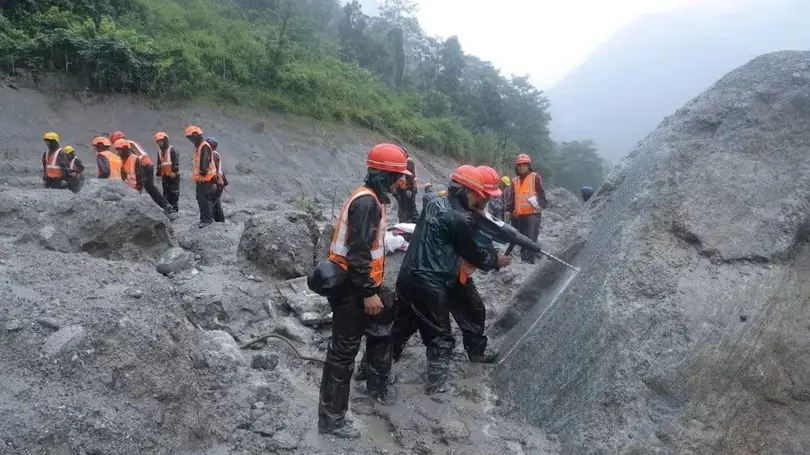
Rescuers search the debris along the Trishuli River in Nepal
A section of glacier broke away high in the Himalayas early Wednesday morning, unleashing a catastrophic flash flood that tore through villages along a 45-mile stretch of the Trishuli River in Nepal and across the border into Tibet, in one of the deadliest natural disasters the region has seen in years.
Authorities said the initial collapse, believed to have originated on the Langtang Lirung glacier, registered as a tremor of roughly magnitude 5.2 on seismometers, momentarily leading some officials to suspect an earthquake before geologists confirmed the debris flow's true origin. The resulting surge of rock, ice and mud destroyed the Gyirong border checkpoint between the two countries and swept away dozens of settlements downstream.
You might be interested in

As of the latest figures from Nepal's disaster management authority, more than 570 people have been confirmed dead and roughly 2,000 remain missing across Nepal and China's Tibet Autonomous Region, though officials cautioned the toll is likely to keep rising as search teams reach areas that remain difficult to access. The U.S. State Department said around 90 American citizens were unaccounted for in the affected region.
Drone footage from the hard-hit Nuwakot district showed roads destroyed and the upper floors of buildings caked in mud, with vehicles buried and debris hanging from trees and power lines. Survivors described having almost no warning before the floodwaters arrived, a pattern rescue workers say has made this disaster especially difficult to respond to.
Scientists studying the region note that this is the second major flood event on the same river system in just over a year, pointing to it as further evidence of how quickly glaciers across the Hindu Kush Himalaya range are destabilizing as the climate warms. Ice loss across the range accelerated sharply over the past decade compared with the one before it, researchers say, leaving mountain slopes increasingly prone to sudden collapse.
Relief efforts are being coordinated across both countries, with Nepal's army and international aid groups working alongside Chinese rescue teams on the Tibetan side of the border, though officials say the same unstable terrain that caused the disaster continues to complicate access to some of the worst-affected communities.