
Amazon deforestation falls to lowest level in more than a decade, Brazil says
Satellite data shows forest-clearing alerts down more than a third from the previous year, a milestone Brazilian officials say reflects tougher enforcement.

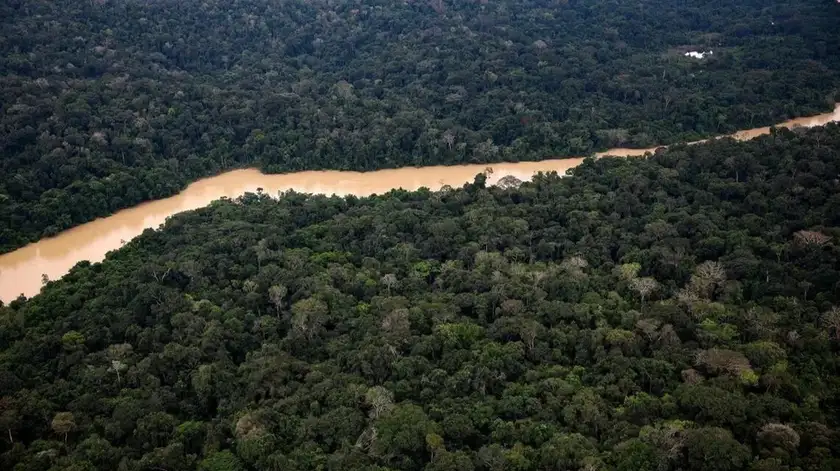
Forest canopy in the Brazilian Amazon
Deforestation alerts in the Brazilian Amazon fell to their lowest level in more than a decade over the past year, according to satellite data released by Brazil's National Institute for Space Research, a milestone officials attributed to strengthened enforcement against illegal clearing.
The institute's monitoring system detected about 2,874 square kilometers of deforestation alerts between August 2025 and July 2026, a decline of roughly 36 percent from the previous twelve-month period and well below the average recorded over the prior decade. Researchers said it was the lowest total logged since the current alert system began operating.
You might be interested in


President Luiz Inacio Lula da Silva traveled to the institute's headquarters near Sao Paulo to mark the announcement, which coincided with the agency's 65th anniversary. Environment officials pointed to expanded federal enforcement operations and a growing number of high-deforestation municipalities agreeing to join government-led conservation initiatives as key drivers of the decline.
The figures arrive months ahead of Brazil's October presidential election, giving Lula, who is seeking a fourth term, a concrete result to highlight on an issue that has been central to his environmental agenda since he returned to office in 2023, following a sharp rise in clearing during his predecessor's administration.
Scientists cautioned that the alert data, while a useful early indicator, is not the same as Brazil's official annual deforestation figures, which are calculated separately using higher-resolution satellite imagery and typically published later in the year. They also noted that a falling deforestation rate does not mean the forest is no longer under pressure, since fires, drought and smaller-scale forest degradation can still damage large areas without registering as outright clearing.
Even so, conservation groups described the decline as a significant and measurable achievement, noting that it demonstrates deforestation trends can shift meaningfully in response to policy choices rather than being an unavoidable byproduct of economic growth in the region.