
Judge extends order blocking Trump's 250-foot triumphal arch near Arlington Cemetery through Dec. 3
Judge Tanya Chutkan said nothing has changed since she first halted work two weeks ago, keeping the project on hold while four lawsuits, including a challenge from members of the Kennedy family, wait on a ruling on a longer-term injunction.

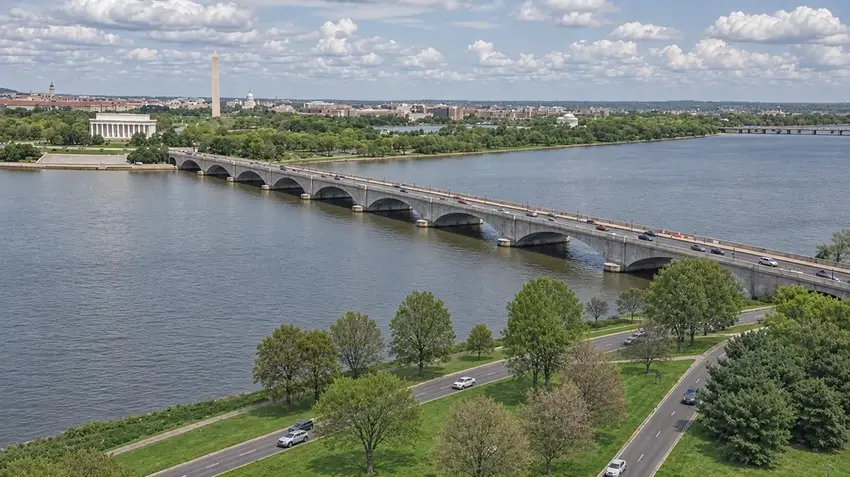
Arlington Memorial Bridge crosses the Potomac River toward the Lincoln Memorial and the Washington Monument; the proposed arch would stand at the bridge's Virginia end
A federal judge on Wednesday kept in place her order blocking construction of President Donald Trump's planned 250-foot triumphal arch at the entrance to Arlington National Cemetery, extending a temporary restraining order by two weeks while she considers whether to halt the project for the longer term, the Associated Press reported.
U.S. District Judge Tanya Chutkan's original order, issued Nov. 5, was due to lapse on Thursday. The extension runs through Dec. 3, or until she rules on the pending motions for a preliminary injunction, whichever comes first, according to UPI. Chutkan found good cause for the delay, concluding that nothing material had changed in the litigation since she first granted emergency relief, and chose to preserve the status quo until she decides on the injunction request, the AP reported.
You might be interested in
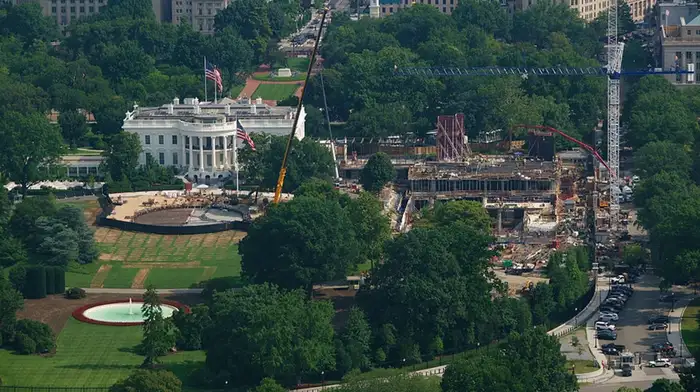
She first stepped in on Nov. 5, within hours of a vote by the National Capital Planning Commission, a panel led by Trump appointees, to give the arch its final approval. The AP reported that the 8-4 vote came over the objections of dozens of witnesses who spoke against the project. The administration has said work could begin as soon as the Interior Department issues a final decision authorizing construction and the National Park Service publishes the required notice, according to the AP.
The monument, which the administration's project website calls the United States Military Triumphal Arch, would rise on Memorial Circle, the traffic circle at the Virginia end of Arlington Memorial Bridge. At 250 feet, it would stand more than twice as tall as the 99-foot Lincoln Memorial and well above the 164-foot Arc de Triomphe in Paris that Trump has pointed to as inspiration, ABC News and UPI noted. UPI added that a National Park Service review in August found the project would negatively affect dozens of historic sites, including the Lincoln Memorial, the Washington Monument and the U.S. Capitol. The AP reported earlier this month that some cost estimates have run as high as $100 million, though the website does not say what the arch would cost or how it would be paid for.
Four lawsuits now stand in the way, according to Scripps News: three are consolidated before Chutkan and a fourth is pending in Virginia. The original case was brought by a group of Vietnam veterans and an architectural historian. The District of Columbia and Virginia sued on Oct. 31, and Chutkan combined their case with the first. The Arlington County Board filed its own suit on Oct. 8 in federal court in the Eastern District of Virginia, challenging the speed of the approval process and the harm the arch could do to the county, which borders the site. Nine members of the Kennedy family have also gone to court, arguing that a structure as tall as a 25-story office building would cast shadows over the graves of President John F. Kennedy and of service members buried nearby, ABC News reported. Veterans groups have separately criticized the planned observation deck, which would give visitors a view of private funerals at the cemetery, UPI said.
At the core of the dispute is whether the administration needs permission from Congress. The original plaintiffs, represented by the Public Citizen Litigation Group, asked Chutkan to bar any construction at Memorial Circle without congressional authorization while the case proceeds, and argue the arch would disrupt the sightlines that connect the capital's landmarks. The administration counters that Congress cleared the way for a monument at the site decades ago. Public Citizen attorney Nicolas Sansone said his side was pleased the judge recognized that the conditions behind the emergency relief had not changed, and hoped the extra time would let the court weigh the case for a longer-term injunction, the AP reported.
In her opinion earlier this month, Chutkan was skeptical of the government's national-security case for the arch. She acknowledged the government's strong interest in security but wrote that claims about the structure's security features had surfaced for the first time in the government's opposition brief and appeared nowhere in the planning documents on which the project was reviewed and approved, ABC News reported. The project website, launched Nov. 6, says the monument would include storage for munitions, positions for snipers and a ground-level area for launching drones, according to an earlier AP report.
The White House criticized the ruling. Spokesman Davis Ingle called it the work of an "activist district court" and said the administration is confident it will be vindicated as the litigation proceeds, the AP reported. Public opinion has not been on the arch's side: UPI, citing The Washington Post, said a recent poll found 22 percent of Americans in favor and 57 percent opposed. Trump told reporters on Monday that the idea is popular with ordinary people rather than what he called paid protesters, UPI reported.
The arch is one of several Washington projects Trump has pursued, alongside a public golf course renovation, the White House ballroom and threats to demolish the Kennedy Center, and many are now being contested in court, the AP reported. On Thursday, the government filed a notice of appeal in the golf course case, challenging a separate 14-day restraining order issued Nov. 14. Democrats take control of Congress in January, and such projects are expected to face far more scrutiny then. For the arch, the next marker is Dec. 3, when the current order expires unless Chutkan rules on a preliminary injunction first. Until then, no ground can be broken at Memorial Circle.