
Bayer wins final approval of $7.25 billion Roundup settlement, but appeals could slow payouts
A St. Louis judge cleared the nationwide class deal covering current and future lymphoma claims, but an expected appeal could pause payments even as Bayer shares were indicated about 7 percent higher before Monday's open.

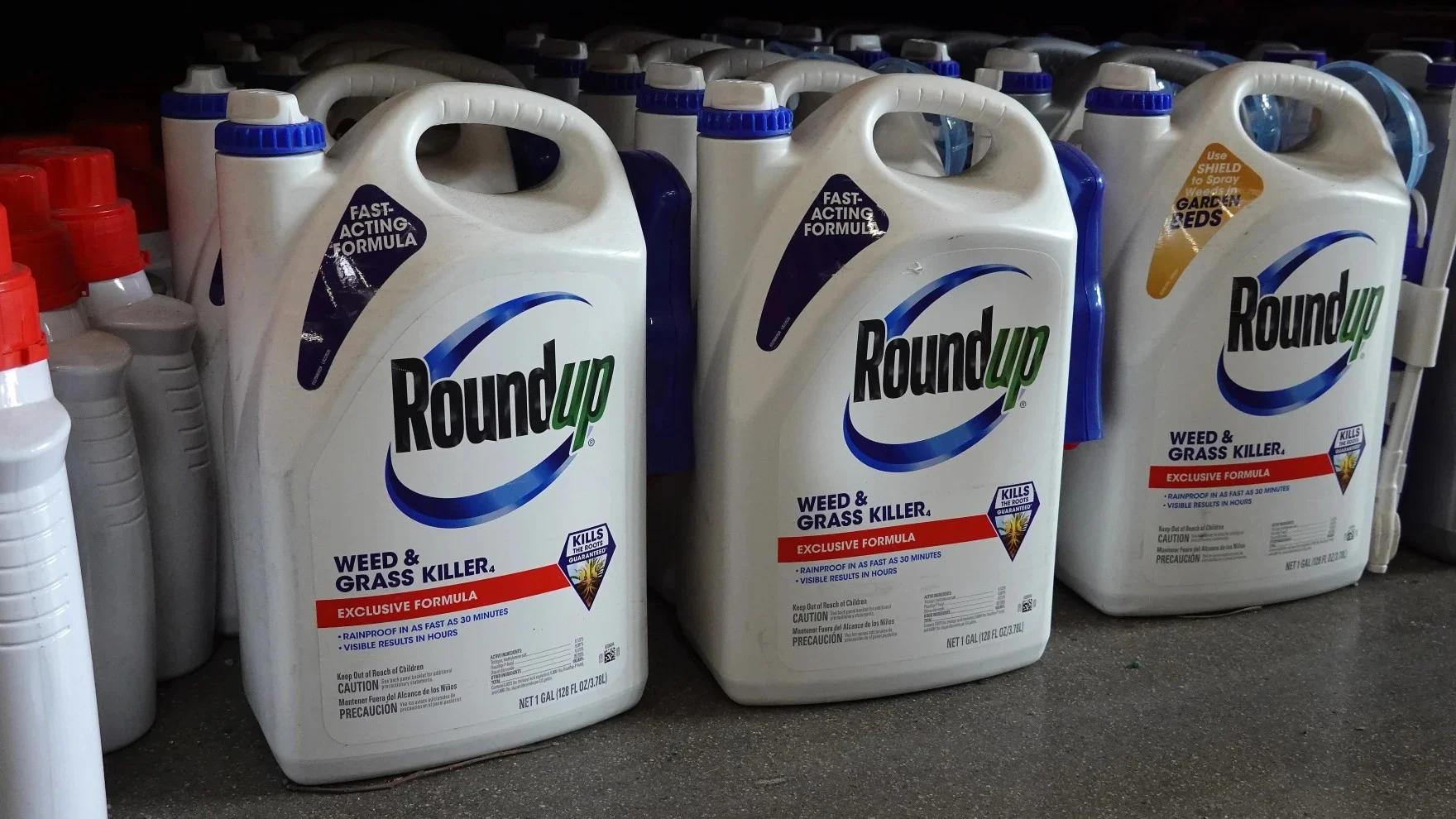
Containers of Roundup weedkiller on a store shelf
A Missouri judge on Friday gave final approval to Bayer's settlement of up to $7.25 billion over claims that its Roundup weedkiller causes cancer, a ruling that could end litigation that has weighed on the German company for close to a decade, Reuters reported. St. Louis Circuit Judge Timothy Boyer found the agreement "fair, reasonable, and adequate," and the Associated Press reported that his written order described the total as among the largest mass-tort personal-injury class settlements in history. Bayer denies that Roundup or its active ingredient, glyphosate, causes cancer, and Newsweek noted that the company said the deal carries no admission of liability or wrongdoing. The decision can still be appealed.
The nationwide class settlement covers people who were exposed to Roundup before Feb. 17 and have been diagnosed with non-Hodgkin lymphoma, or who are diagnosed during a 16-year coverage period, according to Newsweek. Bayer will pay into a special fund in annual installments for up to 21 years, the Associated Press reported. Awards average between $10,000 and $165,000, depending on how a claimant used the product, their age at diagnosis and the severity of the illness, NPR reported. The top tier applies to agricultural, industrial or turf workers with long exposure who were diagnosed with an aggressive form before age 60, while anyone diagnosed at 78 or older averages $10,000, the AP said. Newsweek added that a separate quick-pay route offers qualifying residential users $6,000 to $14,500, and that individual payments can land 20 percent above or below a tier's average.
You might be interested in

The approval followed a June ruling in which the U.S. Supreme Court, by a 7-2 vote, held that federal pesticide law bars state-law failure-to-warn claims, overturning a $1.25 million jury award to Missouri man John Durnell, Reuters reported. The decision undercut a central pillar of many Roundup suits, and Christopher Seeger, a lawyer for many of the plaintiffs, said it narrowed victims' path to court. Judge Boyer said there was a risk Bayer would have sought bankruptcy protection had the settlement been rejected, the AP reported. Bayer has also won the first Roundup jury verdict since the Supreme Court's ruling, in October in Missouri, the AP said, and Bloomberg reported that only 26 cases have gone to trial, with Bayer saying it won 18.
Bayer inherited the litigation when it bought Monsanto for $63 billion in 2018, and its share price has fallen 46 percent since, Reuters reported. The company agreed to pay $10.9 billion in 2020 to settle much of the earlier Roundup litigation but could not win court approval of a $1.25 billion deal to cover future claims. Bayer faced about 65,000 claims in U.S. state and federal courts, according to Reuters, while the AP put the number of Roundup-related claims filed over the years at about 200,000, many from residential lawn and garden users. Reports differ on what Bayer has already reserved: Bloomberg said the company set aside about $10.5 billion for Roundup litigation, including the class settlement, while the AP said it had earlier set aside $16 billion and that the new deal comes on top of that.
Investors had been waiting on the ruling. Bayer's U.S.-listed shares closed little changed on Friday after paring a drop of as much as 3.6 percent, Bloomberg reported, and Reuters said Bayer shares were indicated about 7 percent higher in pre-market trading on Monday, with analysts at Jefferies saying the approval materially reduces both the size and the uncertainty of the glyphosate liabilities. That indication is not a closing price, and Bloomberg noted that the judge's approval itself had been expected.
Opposition came from some plaintiffs' lawyers. Objectors argued the payouts were too small compared with earlier settlements, and Boyer rejected that argument, reasoning that more delay could leave seriously ill claimants, including terminal cancer patients, waiting years, Reuters and Newsweek reported. At a September hearing, attorney Gerson Smoger argued that the deal locks future claimants in for decades with no chance at punitive damages while the product stays on the market, the AP reported. Attorney Roe Frazer said after the ruling that he will likely appeal and keep representing clients individually, Bloomberg reported. The lawyers who led the class deal are due fees that Bloomberg put at $675 million, or 9.3 percent of the payout, and the AP at $600 million.
The next test is the appeals process. Holly Froum, a Bloomberg Intelligence litigation analyst, said the portion of the deal covering future claims is likely to be overturned on appeal because of "notice issues and difficulty of assessing fairness," Bloomberg reported. Bayer has said any appeal would pause further payments into the settlement fund until it is resolved, Newsweek reported, though Eric Holland, lead counsel for future claimants, said some payments could move in the near term and that claimants in exigent circumstances, such as the terminally ill, would be paid even if an appeal is filed. People who opted out by the June 4 deadline are not covered and face a narrower legal route after the Supreme Court decision, Newsweek said. The settlement also leaves out some federal cases, about 200 of which are still being litigated, Reuters reported, with Bayer saying the Supreme Court ruling gives it strong defenses.