December 16, 2025
From government and media to business and education, Americans are steadily losing faith in the institutions that once anchored public life. The reasons are complex, but the consequences are increasingly clear.
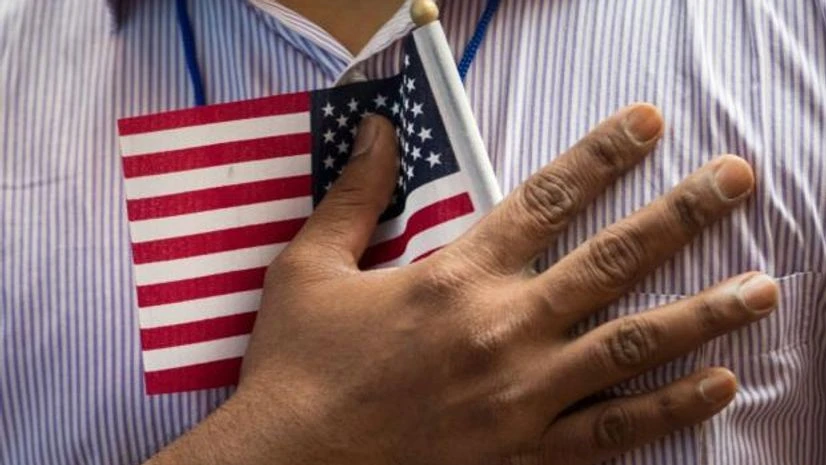
Trust is not something that disappears overnight. It erodes quietly, through small disappointments, broken promises, and a growing sense that institutions no longer serve the people they were built to protect. In the United States, that erosion has reached a point where skepticism is no longer a fringe sentiment—it has become mainstream.
For generations, institutions provided a sense of stability. Government, the courts, universities, the media, and major corporations were not perfect, but they were broadly seen as legitimate. Today, many Americans view those same institutions with suspicion. Polls consistently show declining confidence across nearly every major pillar of public life, and the trend shows no sign of reversing.
Part of the problem lies in performance. Institutions promise accountability, fairness, and competence, yet too often deliver delays, contradictions, and failures. When systems designed to protect consumers, voters, or workers fall short, people remember. Each failure becomes another brick in a growing wall of doubt.
Transparency—or the lack of it—has deepened the divide. Decisions that shape daily life are often made behind closed doors, explained through jargon, or justified only after public backlash. When institutions communicate poorly, or appear defensive instead of accountable, they create the impression that they have something to hide. Even when intentions are sound, perception matters.
The digital age has accelerated distrust. Information moves faster than institutions can respond, and mistakes are magnified in real time. Social media rewards outrage, not nuance, making it harder for organizations to explain complex decisions. At the same time, genuine misconduct is harder to contain, ensuring that failures linger in public memory long after official apologies are issued.
Economic pressure has also played a role. Many Americans feel the system works well for those at the top while leaving everyone else to navigate rising costs, stagnant wages, and uncertain futures. When institutions appear aligned with elite interests, public confidence suffers. Fairness is not just about outcomes—it’s about whether the process feels honest.
Cultural polarization has further strained trust. Institutions are increasingly viewed through partisan lenses, judged less by their effectiveness and more by whose side they appear to be on. Once neutrality is questioned, legitimacy becomes fragile. Rebuilding trust in such an environment is far harder than maintaining it in the first place.
None of this means institutions are irrelevant. In fact, their role has never been more important. Complex societies require systems that can manage scale, enforce rules, and protect rights. The danger lies not in questioning institutions, but in abandoning them without credible alternatives.
Restoring trust will not come from slogans or branding campaigns. It requires consistent behavior over time—clear standards, real accountability, and a willingness to admit mistakes without deflection. Trust grows when people see consequences, not just statements.
The loss of institutional trust is not just a political issue. It affects how people engage with one another, how they view authority, and how they imagine the future. A society without shared confidence in its systems becomes more fragmented, more cynical, and less capable of collective action.
The question facing the United States is not whether trust can be rebuilt, but whether institutions are willing to change enough to earn it back. Without that effort, skepticism will continue to grow—and the costs will be felt far beyond any single institution.