December 30, 2025
Global markets traded unevenly as year-end holidays reduced liquidity, amplifying price swings across equities, bonds, currencies, and commodities.

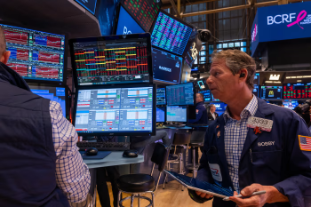
As the year came to an end, the world's financial markets produced a range of results, with trading patterns across asset classes being influenced by weak liquidity. Lower participation levels made institutional investors more susceptible to short-term positioning, headlines, and economic data because many of them took time off for the holidays. This erratic tone was mirrored in equity markets. Major indices in the US varied within small ranges, with profit-taking in certain industries offsetting minor gains in others. Due to the low trading volumes, only a few flows were able to affect prices. Similar trends were seen in European markets, where investors avoided making significant commitments before year-end. Mixed conditions were also seen in Asian markets. While certain indices were under pressure from currency fluctuations and cautious investor attitude, others found support from steady regional data and confidence regarding prospects for global development. Even in the absence of significant news, the region's thin liquidity led to stronger intraday fluctuations. As yields changed in tiny but discernible increments, bond markets displayed symptoms of worry. Due to decreased involvement, price changes frequently represented positioning rather than significant changes. Although many chose to hold off on making significant allocation changes until the new year, investors kept an eye on inflation developments and central bank signals. Light trading conditions had a significant impact on currency markets. Due to less liquidity, reactions to policy commentary and data announcements were amplified, causing exchange rates to move more than usual. While the euro and yen saw brief rallies and pullbacks primarily due to technical causes rather than new fundamentals, the U.S. dollar fluctuated unevenly against key counterparts. Similar traits were seen in commodity markets. Supported by consistent demand estimates and constrained by cautious positioning, energy prices fluctuated within narrow bands. While industrial commodities responded to changes in growth outlooks and currency fluctuations, precious metals remained stable as investors maintained defensive exposure. Due to a lack of market depth, year-end trading frequently results in inflated price action, according to market participants. Even when underlying sentiment is largely consistent, markets may appear more volatile when there are fewer active buyers and sellers. Longer-term investors usually stay on the sidelines in this atmosphere, which favors short-term traders. Market behavior was also impacted by changes made to institutional portfolios. Fund managers prepared allocations for the upcoming year, aligned portfolios with year-end benchmarks, and completed final rebalancing tasks. Temporary distortions may result from these changes, especially in less liquid market areas. Analysts stressed that year-end situations should be evaluated cautiously despite the conflicting tone. It might be challenging to make clear judgments regarding the direction of the market when there is thin liquidity since it can mask underlying tendencies. Many investors would rather hold off until January trading, when more definite signs appear and participation levels return to normal. Although macroeconomic uncertainties and geopolitical developments remained a threat to markets, the holiday slowdown lessened their immediate impact. Investors continued to pay attention to global GDP indicators, central bank outlooks, and inflation data, all of which are anticipated to become more significant once regular trading activity begins. As liquidity returns and investors realign, market players anticipate that volatility will continue into the first few weeks of the new year. As pent-up demand and delayed decisions join the market, the shift from low year-end trading to full participation frequently results in stronger movements. Global trading at year's end often showed a careful balancing act between optimism and moderation. Thin liquidity and a range of asset class outcomes highlighted the significance of context in evaluating late-December market movements, paving the way for more clear-cut trends in the next year.